Talk to a builder →
Peptide basics

What is a peptide?

⚡ Short answer

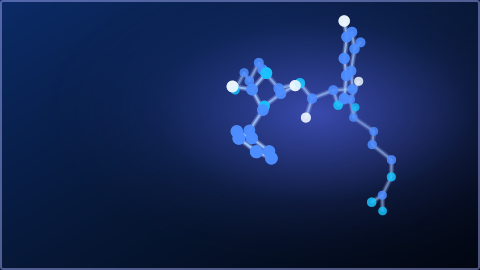
A peptide is a short chain of amino acids joined by peptide bonds. Chains of roughly 2 to 50 amino acids are called peptides; longer, folded chains are proteins.

Educational onlyUpdated 21 Oct 20262 sources
Peptide basics

Amino acids in a chain

Amino acids are small molecules with an amino group at one end and an acid group at the other. When the acid group of one amino acid reacts with the amino group of the next, they join with a peptide bond and release a molecule of water.

Repeat that and you get a chain. The order of the amino acids in the chain is the peptide's sequence, and it is written with one- or three-letter codes, for example GEPPPGKPADDAGLV.

Peptide basics

Peptide or protein?

There is no hard cut-off, but chains up to about 50 amino acids are usually called peptides. Longer chains that fold into a fixed 3D shape are called proteins.

Your body makes many peptides itself. Insulin, at 51 amino acids, sits right on the boundary and is often called a peptide hormone.

Peptide basics

How peptides are made in a lab

Most synthetic peptides are made by solid-phase peptide synthesis. The chain is built one amino acid at a time while anchored to tiny resin beads, then cut free and purified. The method earned Bruce Merrifield the 1984 Nobel Prize in Chemistry.

After synthesis the peptide is usually purified by HPLC, checked by mass spectrometry, and freeze-dried into a powder.

Peptide basics

Where "research peptides" fit

Some peptides are licensed medicines, prescribed and made to pharmaceutical standards. "Research peptides" are sold for laboratory research only. They are not approved medicines and are not for human or animal consumption.

Educational information only

Educational information only. Nothing here is medical advice, dosing guidance or a recommendation to use any substance. Research peptides are not approved medicines and are not for human or animal consumption. Speak to a qualified professional and follow the law where you are.


Related questions

Peptide basicsWhat does lyophilized mean?Peptide basics. Educational only.Read →Testing + certificatesWhat is HPLC purity?Testing + certificates. Educational only.Read →RegulationWhat does "research use only" mean?Regulation. Educational only.Read →Compound profilesWhat is BPC-157?Compound profiles. Educational only.Read →Compound profilesWhat is TB-500?Compound profiles. Educational only.Read →Compound profilesWhat is GHK-Cu?Compound profiles. Educational only.Read →Testing + certificatesWhat is a certificate of analysis (COA)?Testing + certificates. Educational only.Read →Testing + certificatesHow do you read a peptide COA?Testing + certificates. Educational only.Read →Testing + certificatesWhat does mass spectrometry confirm?Testing + certificates. Educational only.Read →Peptide basicsWhat is the difference between a peptide and a protein?Peptide basics. Educational only.Read →Peptide basicsWhat is a "research peptide"?Peptide basics. Educational only.Read →Compound profilesWhat is Semax?Compound profiles. Educational only.Read →Compound profilesWhat is SS-31?Compound profiles. Educational only.Read →Testing + certificatesWhat is third-party testing?Testing + certificates. Educational only.Read →Testing + certificatesIs HPLC purity the same as net peptide content?Testing + certificates. Educational only.Read →Testing + certificatesWhat is endotoxin testing?Testing + certificates. Educational only.Read →Lab handling + storageHow are lyophilized peptides stored?Lab handling + storage. Educational only.Read →RegulationHow are peptides regulated in the UK?Regulation. Educational only.Read →Choosing a supplierWhat are the red flags in a supplier?Choosing a supplier. Educational only.Read →

Watch Short explainers